Monday, November 16, 2015

Pumpkin spice and the ultimate evil

While we are in the heart of the pumpkin spice season, it is worth thinking back to the sordid history of the spices in your latte. What we normally consider “pumpkin spice” is usually a combination of cinnamon, nutmeg, clove, and ginger all sweetened with a generous helping of sugar. It is in the pursuit of these flavors that some of the greatest acts of evil ever were committed.

The hunt for cinnamon, nutmeg, and clove in the so-called “East Indies” is what began and fueled European colonialism. To secure these spices, governments were overthrown, wars were fought, nations were destroyed, colonies built, and whole groups of people were oppressed. Empires rose and fell on the trade of these spices.

Even worse is what was done to secure sugar, part of this popular spice combination. First, the native people of the Americas were enslaved or killed to make room to grow sugar. When they proved no longer a sufficient source of forced labor to meet demand, slaves were brought from Africa. The transatlantic slave trade was primarily about obtaining sugar. Over the centuries millions of slaves were brought from Africa to the Caribbean so they could be worked to death on sugar plantations. Suffering and greed was not limited to one side of the Atlantic. The sugar-fueled slave trade helped produce a near endless state of war in parts of Africa as local slavers needed to create a constant supply of new captives to sell.

It is not an exaggeration to say at one point in time millions of people were dying so some people could enjoy the equivalent of a pumpkin spice treat. I remind you of this history not to make you feel bad about your latte but to provide an example of why at my heart I’m a techno-optimist. While there are still some issues with international farming practices, things are dramatically better than they once were. Thanks to advances in technology, millions of people can enjoy the luxury of pumpkin spiced drinks and desserts without creating massive suffering. It makes me wonder how advances in automation will make the current production of luxuries (such as our cheap t-shirts and cellphones) look horrifying and barbaric to our grandchildren.

Monday, November 2, 2015

On a personal note - Freelancing, Novel, Wedding, and Moving

There are a few big personal developments for me. I'm going to be moving to Portland, Oregon at the beginning of January and getting married at the end of February. In addition, while I've been putting the finishing touches on my first novel, I've started to do some freelance writing for different outlets.

Some of my drug policy reporting and analysis is already being featured at Massroots. Two of my articles are currently on their blog:

Five of marijuana reform’s biggest opponents

Bernie Sanders wants to end federal marijuana prohibition

As a result of all this, my futurist posts here will be a little light for the next few months, but if your organization is interested in hiring me for freelance writing or consulting, please let me know. Similarly, if you have any suggestions, ideas, hints, or opportunities for me when I get to Portland, please send them along.

Thanks for your support.

Thursday, October 22, 2015

My marijuana predictions coming true

Back in January of 2014 I published my first policy book, After Legalization: Understanding the Future of Marijuana Policy. In the book I try to predict what is likely going to happen over the next 20 years in marijuana policy. I'm going to take a moment to look back at some of the big predictions I got right and those I got wrong. So far three of my larger predictions have already come to fruition.
  1.  That Alaska and Oregon would vote to legalize marijuana in November 2014 - While not the boldest prediction at the time, the success of these two legalization campaigns was in no way guaranteed. Midterm elections tend to see lower turnout among young voters, and in 2012 the voters of Oregon rejected a different legalization ballot measure.
  2. The Liberal Party would likely win the federal Canadian election and will push for marijuana legalization in 2016 - Earlier this week, the Liberal Party won a majority in parliament, giving them free rein to implement any policy they want. Liberal Party leader Justin Trudeau has promised to push for legalization "right away," and we should expect a bill in 2016 or 2017.
  3. That some states would require individuals to register and pay a small fee to grow marijuana at home for personal use - I thought this strategy would be appealing to policy makers because it would allow states to get revenue from home growers and make it easier to prosecute people who are abusing home growing provisions to produce bootleg marijuana. This is exactly what the ResponsibleOhio ballot measure will do if it is approved this November. It will require people to pay a $50 registration fee if they want to grow up to four plants at home.
I have gotten a few things wrong, though. I predicted there wouldn't be a legalization measure on the local ballot in D.C. until 2020, because I thought pro-legalization groups would be worried about congressional interference otherwise. This prediction was only half right. The voters of D.C. did vote overwhelmingly to legalize marijuana use in November 2014, but in response Congress adopted a budget rider that has prevented the city government from implementing a tax-and-regulate system.

I similarly didn't expect Ohio to vote for marijuana legalization until 2020, but Ohio may actually legalize marijuana much earlier. With just a few weeks until the election, polling currently shows Issue 3 is tied 46 percent yes to 46 percent no. If Issue 3 fails, there is a good chance different legalization measures might appear on the ballot in 2020 like I initially predicted, but I would prefer not to be proven right that way.


Tuesday, October 20, 2015

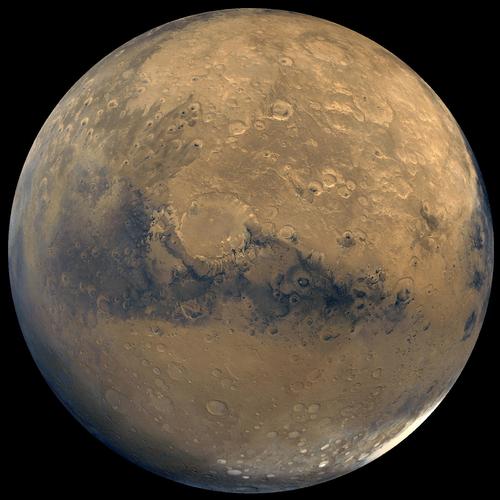
Mars is also a harsh mistress

Warning: Spoiler alert for The Martian

I'm a big fan Andy Weir's book The Martian, and I recently saw the motion picture it inspired, which I think is one of the most faithful and enjoyable book adaptations in recent times.

For those who haven't read the book, it is the story of one astronaut who is accidentally left behind on Mars and the extraordinary efforts he needs to go through to survive. Since Earth is so far away it takes years to send help, so he needs to basically MacGyver everything in order to survive from only the supplies on hand.

One thing I love about the book is that it properly captures how Mars' distance from Earth, combined with its cold and completely inhospitable climate, make it a great setting for a dramatic story of survival. These factors also make it a really stupid place to colonize. The story really drives home that Mars has almost nothing to help a human survive besides some weak sunlight, rocks, and modest gravity.

While I strongly support limited manned missions to Mars for scientific purposes, the idea that it should become a second home to save our species from extinction is deeply misguided. If we are looking for a place to colonize, there are numerous asteroids which can be brought close to Earth, have better access to free solar power, and can be turned into rotating habitats to produce a more desirable level of artificial gravity.

*image of Martian landscape from NASA

Thursday, October 15, 2015

Have we found an alien ringworld?

In one of my earliest posts on this blog, I speculated that our best chance of ever detecting intelligent alien life in the universe would come from actually seeing signs of their truly massive stellar architecture. A new paper indicates we just might already have.

Around one mature star there appears to be a highly unusual mess of objects circling it, which is very difficult to explain. From the Atlantic:

Boyajian, the Yale Postdoc who oversees Planet Hunters, recently published a paper describing the star’s bizarre light pattern. Several of the citizen scientists are named as co-authors. The paper explores a number of scenarios that might explain the pattern—instrument defects; the shrapnel from an asteroid belt pileup; an impact of planetary scale, like the one that created our moon. [...]

Jason Wright, an astronomer from Penn State University, is set to publish an alternative interpretation of the light pattern. SETI researchers have long suggested that we might be able to detect distant extraterrestrial civilizations, by looking for enormous technological artifacts orbiting other stars. Wright and his co-authors say the unusual star’s light pattern is consistent with a “swarm of megastructures,” perhaps stellar-light collectors, technology designed to catch energy from the star.
It is most likely this pattern was caused by an extremely rare set of natural phenomena, but the small possibility that it could be the result of some type of alien ringworld or Dyson sphere is extremely intriguing.

If follow-up research does indicate this pattern is caused by something artificial, it would carry two huge implications. The first is that we are not alone in the universe. The second is that there is alien civilization which possesses technology that is thousands or even millions of years more advanced than our own to be able to create something like this.

*image of Kepler from NASA

Thursday, September 24, 2015

What is the minimum population for a modern society?

Elon Musk's push to send a million people to Mars (a plan which I think is misguided) highlights an interesting question: How many people do we need to operate a modern society?

I'm writing this article on a computer made from components that were built in a dozen different factories. In turn, these components were made from materials from all over the world. The plastics were likely made from Middle Eastern oil, copper probably came from Chile, silicon from China, lithium from Australia, chromium from South Africa, nickel from the Philippines, etc...

Currently, the modern world is built on a complex web of global trade that relies on tens of millions of people. Simply reproducing basic pieces of critical technology on a new planet would take numerous mines, refineries, and factories spread all over. Each of these factories would need to be staffed and would require local communities to provide them with basic services.

The minimum number of people a new planet would need to be capable of building computers, tractors, phones, antibiotics, and other basic necessities of modern life could easily be in the millions or tens of millions.

This creates a serious problem for any possible colony, on a new planet either in this solar system or a nearby one, with relatively few solutions:
  1. Send a truly massive number of colonists at once.
  2. Pay the expense of constantly providing a colony with new technological supplies for decades.
  3. Have colonists willing to lose access to modern technology for possibly generations until the population grows to a minimum level. (Not really viable on a planet without a breathable atmosphere.)
  4. Find a way to make necessary equipment extremely durable while the population grows.
  5. Come up with a way to make advanced technologies on a small scale using few elements, like super advanced 3D printing.
A good planetary colony proposal or science fiction story about a colonization really needs to think about how to solve this problem of scale.

Thursday, September 10, 2015

Colorado's accidental experiment on legal marijuana taxes

Thanks to the unusual set of rules governing taxes in Colorado, the state is about to perform a natural experiment to test how much marijuana taxes matter to consumers. On September 16th there will be no adult use marijuana excise taxes in Colorado. From Time:

Colorado’s Taxpayer’s Bill of Rights requires voter approval for new taxes. In 2013, a year after legalizing recreational pot, voters approved the 25 percent taxes. But the law requires that any new taxes be waived and refunded if overall state collections exceed projections given to voters when they approved the new taxes.

In this case, the pot taxes were projected to raise $70 million in 2014. They actually raised $58 million, but because overall tax collections that year exceeded projections, Colorado must ask voters for permission to keep the money. And to comply with the requirement that the taxes revert to zero, lawmakers settled on a short one-day tax waiver.

That day is Sept. 16, one day after the state’s books for the previous fiscal year are made final.

One of the biggest policy questions for marijuana reform is what tax rate to set. Many jurisdictions and legalization proposals are focused on trying to find the sweet spot which maximizes revenue but remains low enough to undermine the black market. So it will be very interesting to see by how much legal adult use marijuana sales increase in September and compare that with a few weeks before and after.

There is almost guaranteed to be some spike in sales during this one-day tax holiday, but it would be very informative to look at the data to try to find out why. Does it mainly come from regular customers delaying their purchases a few days for a tax break, or will a significant number of people who have been purposely using the black market to avoid taxes take advantage of this opportunity to go to the legal stores?

If the total sale of legal adult use marijuana for all of September and October simply average out to be roughly the same as other months, then it would probably be safe to conclude any spike in sales on September 16th was mainly caused by people who would have used the retail stores anyway. The net effect would be the same amount of legal weed being sold over this time period. On the other hand, if this one-day tax holiday causes an even larger spike in sales than that, it would indicate the tax holiday caused a significant number of people to at least temporarily use the legal market instead of the black market. That would suggest marijuana excise taxes need to be even lower to really drive out the black market.

Obviously, a one-day tax holiday isn't the best experiment for answering this question, but given how little data we have on legal marijuana tax policy, it deserves some serious attention.