Friday, March 17, 2017

No, really: Democrats should offer an AHCA alternative

Some people on the left are rightly mocking Sen. John Cornyn (R-Texas) for saying Democrats who don't like the Republican Obamacare repeal-and-replace plan should put forward their proposal. After all, the Democrats' already did: it is the current law.

But this is a good chance to highlight differences and drive home the problems with Trumpcare. While the ACA has gotten marginally more popular during this repeal fight, polling shows almost no one thinks the law is perfect, and most want to see it significantly improved.

Democrats could quickly and easily put out a package based on already-scored ideas that would reduce premiums, increase coverage, and lower the deficit. It would do all the things Trump promised to do during the campaign but is now planning do the opposite of with his current repeal-and-replace plan.

It could simply contain a public option, a drug manufacturer rebate provision, and an improvement in exchange subsidies.

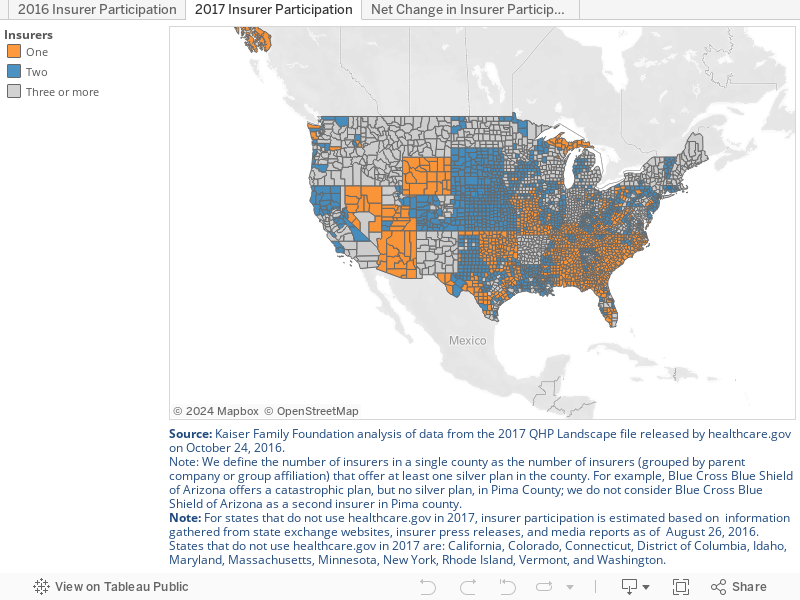
Public Option: Back in 2013, the CBO determined adding a public option would save $158 billion over 10 years and offer premiums 7 percent to 8 percent lower than private plans. It would also ensure there would be a reliable option in the huge segment of the country where the exchanges have only one or two insurers.

Require Manufacturers to Pay a Minimum Rebate on Drugs Covered Under Part D of Medicare for Low-Income Beneficiaries: In 2016 the CBO estimated this would reduce the deficit by $145 billion.

Improve Exchange Subsidies: Democrats can set aside $3 billion to make this plan nominally deficit reducing. They could use the remaining $300 billion in savings to significantly improve exchange subsidies. There are many ways to do that, but I would recommend capping what anyone on the exchange pays for a silver plan at 8 percent of their income -- the same limit used in Switzerland. This would fix the very real and deeply problematic Obamacare subsidy cliff. This should also increase the number of people insured.

Since this is a political proposal with no chance of passing, it makes sense to keep it simple, but it would be a smart move. Even if the Republican bill fails, that is not the end of the fight over health care. Paying for their own health care is the top concern for American families. People want to see change. Putting forward this package would show Republicans want to cover fewer people and provide less help to struggling families while Democrats want to lower premiums and provide more help to middle class families. All Democrats need to do is actually care more about helping people than corporate donors, and they can win the debate.
Wednesday, March 15, 2017

The Dustin Plan: a very easy and very stupid way to reduce average premiums

There is a very easy and very stupid way to dramatically reduce premiums in the non-group market. I call it the Dustin Plan. If you make it illegal for anyone to buy individual insurance except for people named Dustin who are under the age of 30, average premiums in the non-group market would be cut by roughly 70%. Young people named Dustin are very healthy, so very cheap to insure. Of course, this is terrible for millions of people not named Dustin.

While not as dramatic, the House Republican health care plan basically includes a version of the Dustin Plan. The Republicans are trying to highlight this one piece of "good news" in their otherwise terrible CBO score, but it is not good news.
First, the mix of people enrolled in coverage obtained in the nongroup market is anticipated to be younger, on average, than the mix under current law. Second, premiums, on average, are estimated to fall because of the elimination of actuarial value requirements, which would result in plans that cover a lower share of health care costs, on average. Third, reinsurance programs supported by the Patient and State Stability Fund are estimated to reduce premiums. If those funds were devoted to other purposes, then premium reductions would be smaller. By 2026, average premiums for single policyholders in the nongroup market under the legislation would be roughly 10 percent lower than the estimates under current law.
The Republican plan will bring average premiums down by making insurance so expensive for many older Americans in the individual market that they would be forced to go uninsured, leaving behind only young people in the risk pool. It would, in fact, improve life for thousands of young Dustins, but by making insurance out of reach for millions of people who really need care.

It is a reminder that the focus placed on many metrics in the health care debate, such as average premiums or even total number of people with "insurance," is often misguided or misleading. The real question is how many people are able to get care when they need it and be able to afford it.

Tuesday, March 14, 2017

The tech world is spending like it expects robots to take your jobs

There seems to be a rather big split between some leaders in the tech world who think mass automation driving unemployment is just around the corner and many economists who think the relatively slow growth in productivity means these fears are misguided. Both these worlds have been wrong over the years in big ways, but this is not just idle chatter from the tech world.

The biggest tech companies are betting a lot of money on technology that would result in millions of jobs becoming obsolete. Just this week, Intel spent more than $15 billion on a self-driving car technology company. From Business Insider:


Intel, in its second-largest acquisition in its 50-year history, is spending a whopping $15.3 billion to buy the self-driving-car-tech company Mobileye.

If self-driving vehicles are the future — as Uber, Alphabet, and others believe — Intel wants to sell the bits that make them happen.

Just as PCs were once adorned with the reassuring "Intel Inside" stickers, the chipmaker is betting that it can gain a similar foothold inside another product that could sell tens of millions of units ever year.

Tech leaders could be wrong, but they are certainly spending money as if they are convinced the robots are coming -- at least for our driving jobs, which employ around 5 million Americans.

Monday, March 6, 2017

What is ending the fight over health care worth to Democrats?

As Republicans struggle to come up with a repeal and replace plan for the Affordable Care Act, Democrats are indirectly presented with an interesting question: what would ending the fight over health care be worth to them?

So far Democrats are just sitting back and hoping congressional Republicans fail. This would technically leave the ACA in place, but this strategy is a major policy and political gamble. Even if this strategy succeeds, it means having the management of the ACA -- which has so far depended on aggressive/legally questionable regulatory maneuvering by the Obama administration to keep it semi-functional -- will be in the hands of a very resentful administration for the next four years. President Trump has already said he thinks the politically easiest thing to do would be to let Obamacare “implode” on its own in the next few years rather than push for a replacement.

If the Trump team decides to undermine the ACA over the next four years, Democrats might be able to successfully get voters to blame this “failure” on Trump, but it is hard to know how the optics would play out with Republicans blaming the law instead. Most voters don’t understand the complexity of properly running things like reinsurance programs to truly judge who is right in such a technical dispute. The ACA has gotten more popular during talk of repeal, but its approval numbers are still very weak.

For now just watching as Republicans flounder is a good strategy, but if Democrats decide to throw Trump a political lifeline at the last minute, they have four big things to gain.

1) GOP accepts principle of everyone getting help: Based on President Trump’s recent statements and the leaked draft proposal from House Republicans, the GOP leadership is prepared to officially make two big ideological concessions: that no one should be denied coverage because of a pre-existing condition and that every American regardless of age, sex, or income should get help from the government affording health care. As a matter of principle, that is not something even we saw from the ACA, which left many middle class workers with no help and no affordable coverage. This is why the Freedom Caucus is so upset -- they know what a big paradigm shift this new entitlement would be. While far from perfect, the current GOP ideals would end the partisan argument about whether the government should help everyone get coverage and change the fight to how/how much help.

2) Trump buy-in to try to make it work: Don’t underestimate how much leeway the executive branch has to make laws work or not. A worse law that the executive branch is really trying to make work could easily perform better than any law the administration is trying to undermine.

3) Red state buy-in for Medicaid: Any bipartisan replacement law will likely have a worse version of the Medicaid expansion. However, if it gets the blessing of Trump and Paul Ryan, you can bet that all the red states will take part. That adds up to some 2.5 million people who could benefit.

4) A chance to fix some of the ACA’s problems: The ACA has some real problems that range from big to small technical issues. This would be a chance to fix some of them. If Democrats don’t get a GOP buy-in for fixes now, it could be -- what, four years? eight years? 12 years? -- before they regain full control of Washington to approve any fixes.

So the question for Democrats is what is all of this worth to them? How much better does the draft GOP plan need to be? If the Republicans agreed to, for example, peg the age-based tax credits at the cost of a catastrophic plan and leave Medicaid expansion mostly alone, would that make ending the fight worth it? I don’t have the answer and the opportunity may never come up, but it is a question that the party should at least quietly be thinking about.

Thursday, March 2, 2017

Be careful crediting Obamacare for health spending slowdown

Among people who support the Affordable Care Act, there are many who want to give it credit for the recent slowdown in health care spending, but data supporting that position has a big weakness.

In the broadest sense, there are two things that can cause health care spending in a country to change. The first is national factors, such as major health care legislation or new federal policy. The other is international factors, which you would expect to impact health care in basically all first-world countries, such as a slowdown in new blockbuster drug development, more effective medical techniques, new worldwide epidemics, new diagnostic tests, etc...

With that in mind, take a look at this chart from the World Bank of health care spending as a percent of GDP:


While there was a clear slowdown in U.S. health care spending that started around 2010, when the ACA was signed into law, you also saw a nearly identical worldwide slowdown at the same time. Looking at this chart, your first thought wouldn't be, "the United States must've done something unique starting in 2010." Your first thought would be that the United States tracks first world spending patterns almost perfectly, just at an absurdly higher rate. If you didn't know America approved a major health care law in 2010 that was meant to deal with costs, you wouldn't have guessed it from looking at this chart.

Provisions of the ACA might indeed be having a positive effect, but you should be cautious about giving it all the credit or even most of it. Policymakers run the risk of learning the wrong lessons.

Wednesday, March 1, 2017

A progressive deal for the GOP's age-based tax credits

NHSAccording to a leaked draft of the House Republicans' health care proposal, they are planning to replace the Affordable Care Act's income based exchange subsidies with age based tax credits ranging from $2,000 for younger adults to $4,000 for older adults.

Liberal critics have rightly pointed out that $4,000 isn't enough money to allow lower income older Americans to buy any kind of decent coverage in our system. This is true, but it is mostly true because for decades both parties have done effectively nothing to stop the health care industry from ripping people off. We let hospitals, doctors, labs, and drug companies radically overcharge Americans for basically everything. In a sane healthcare system, $2,000-$4,000 would be an ample amount to provide coverage. For example, these tax credits would effectively cover the entire cost of basic health insurance premiums in Switzerland. By comparison, in 2014 the UK's per capita health care spending was only $3,935.

So I offer this tongue-in-cheek progressive compromise with Congressional Republicans: In exchange for progressive Democrats' support for the Republican ACA replacement law, the GOP agrees to replace the age based tax credit of $2,000-$4,000 with tax credits pegged to whatever the United Kingdom's NHS spends on an average person in that age group to take care of all their health care needs without any deductible. This should please Republicans by keeping the size of the tax credits at roughly the same level they've proposed. But this way, progressives will have created a constant and direct reminder for people of how horribly overpriced our private insurance system is.

Tuesday, February 28, 2017

The Radiologist Protection Act of 2024

Medical X-Ray imaging ALP02 nevitI think the single most telling political fight likely to happen in the near future is how radiologists and pathologists will respond to AI. This is a fight that will help define the future of health care, class, politics, and the nature of employment.

Radiologists are some of the highest paid and most educated workers in the country who are performing a task ripe for replacement by AI. At the most basic level, radiology is about using high-level pattern recognition to diagnose diseases, and pattern recognition is something computers are getting dramatically better at every year. Already, programs can perform as well or better than top doctors in these types of tasks.

According to one study, "The retrospective error rate among radiologic examinations is approximately 30%, with real-time errors in daily radiology practice averaging 3–5%." Given the current error rate among human radiologists and the speed at which technology is improving, it is easy to see how using AI could soon not just be dramatically cheaper and faster but significantly safer.

It might be five years, ten years, or twenty years, but there will be a point where having a human read your test results instead of an AI-powered program will seem even stupider than hiring a person to multiply several large numbers with pen and paper (which was once a common job) instead of using a calculator. It would not just be more expensive but extremely dangerous to use a human.

It is not a question of if most radiologists can be replaced by machines, but a question of what they will do when it happens.

So far, groups in the health care industry have proven to be very adept at lobbying for laws that protect them from competition or grant them special privileges. That is partly why it is such a rapidly growing segment of the economy with the greatest number of highly paid workers. That is why I have no doubt that when the time comes, radiologists will fight to keep their highly paid jobs either by stopping these programs or requiring a highly paid radiologist to needlessly rubber stamp results from a computer.

I suspect radiologists are probably the single group best positioned to win a fight against being replaced by AI given their wealth, prestige, and lobbying power. Additionally, it is hard to dismiss them with the advice offered to most workers being displaced by technology:  "Just get more education."

If radiologists do get their Protection Act, it will serve as a model for other occupations. Jobs and salaries aren't based on usefulness but on political clout and defined privileges. We could see a future that more resembles a medieval guild-based economy than a free market. If, on the other hand, radiologists lose, I don't see any group stopping the robots.