I've finished a first draft of my science fiction novel, Cobalt Slave. It is a hard sci-fi story set on a new planet colonized by a slowship.
Cobalt is a trace element necessary for human life. In the story, one man realizes that by controlling the entire supply of cobalt he can control this new world. As a result, everyone on the new colony has to do what the Department of Public Health commands, or the department simply lets them die a slow, painful death by vitamin deficiency.
With the planet's irreplaceable, high tech equipment brought from Earth slowly breaking down, the new Director of the Public Health Department is forced to find new ways to maintain his power. This creates an opening for others both outside and within his government to try to seize control of the cobalt. It is a story of intrigue, backstabbing, and rebellion set in a unique world.
This project was just for fun. If you are interested in reading to give me feedback or help me get it published, let me know.

Thursday, August 27, 2015

Wednesday, August 19, 2015
There are unicorns out there
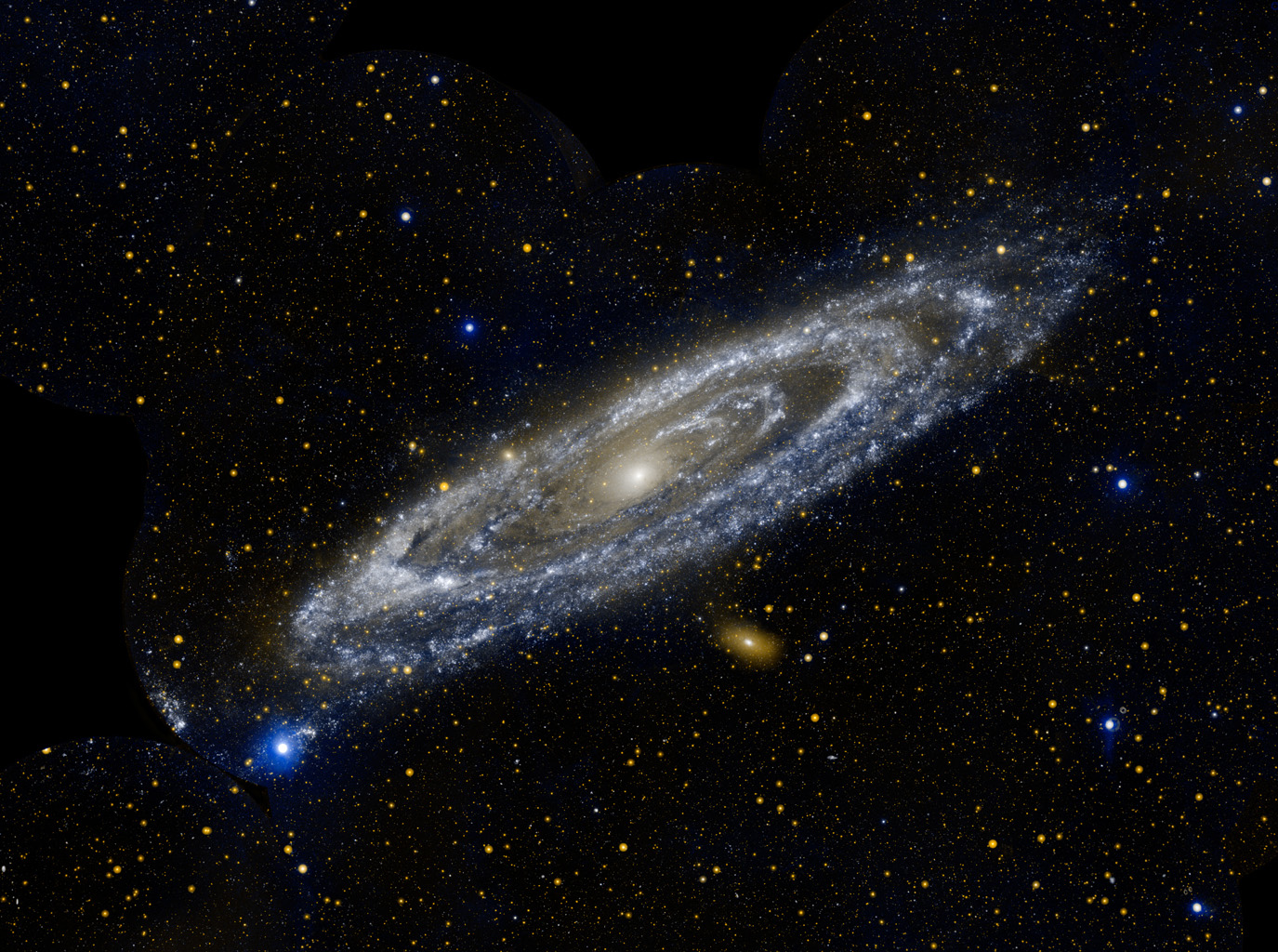
The number is so great that if certain things are technically possible they become almost probable. Basically, any creature that we can imagine, as long as it obeys the basic laws of physics and would make at least some evolutionary sense, probably exists in some form, somewhere out there.
So on some distant planet, there is likely a species of animal that evolved to fill the same ecologic niche as equines and also have a single long horn for mating displays. There is a very good chance that in some alien forest, there are large, hairy bipeds walking around that look and act just like our mythical sasquatches. At this moment, there are probably large, scaly, winged creatures flying around looking for prey under a distant star which bear an incredible resemblance to dragons.
This is one of the things that has always drawn me science fiction over fantasy. While I won't live long enough to see if we ever find anything like the incredible creatures or worlds some of the greatest sci-fi authors have dreamed up, there is something magical knowing that probability suggests they may really exist in some form out there.
*Andromeda galaxy picture from NASA
Monday, August 10, 2015
My drug sniffing app

Naturally, you might be wondering how I was able to come up with a way to accurately detect illegal drugs with the just the mic of a simple smartphone. The answer is I haven't -- but that does not at all matter. Being able to accurately tell if a suspect might have drugs in their vehicle is simply not a concern for our justice system.
Our current system often uses so-called "drug sniffing dogs," and they are often truly terrible at their jobs. The problem is dogs aren't trying to find drugs. They are trying to make their handlers happy, and often what makes their handlers happy is getting a legal excuse to search a suspect's car. Some dogs will give the alert basically every time they are brought out to a car, regardless if there are drugs or not. Yet American courts still allow these dogs to be used as an excuse for a search.
Since it seems what our police and judicial system really wants is just a flimsy excuse to freely circumvent the 4th Amendment, there is naturally an incredible opening for innovation and tech disruption. It is dramatically cheaper and faster to program an app to indicate that illegal drugs might be present whenever it is convenient for a police officer than it is to program a dog to. Instead of spending thousands on training a dog with a horrible false-positive rate, the government could spend just $1.99 on my app with an equally bad false-positive rate.
Too many tech companies are too focused on how to make things actually work better or faster. They have missed a real opportunity to make money helping the government do something that doesn't work.
Friday, July 24, 2015
The really important labor issue with Uber
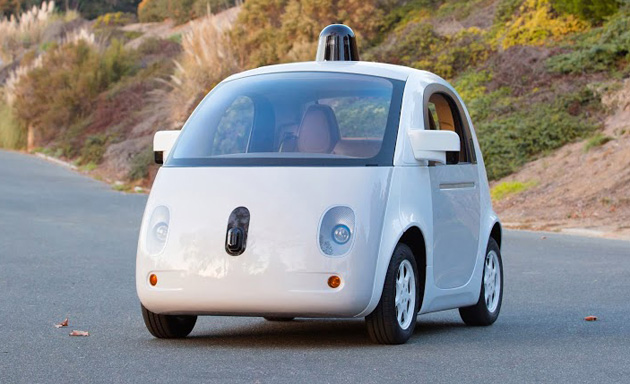
There has been a lot of attention focused on the labor issues with Uber’s business model such as: Whether Uber drivers are actually employees or independent contractors? What the level of background checks is necessary for drivers? How should Uber cover the liability insurance of its drivers? Etc…
While these issues matter, it is important to keep in mind they are also very short-term problems. In five to ten years, they will be nonexistent. So it is even possible that by the time some of the labor lawsuits are resolved, the issues will no longer still exist.
For Uber, freelancers using their own vehicles to drive people around is not its ultimate business model -- it is only a temporary stopgap. Uber doesn't want to be a rideshare service but a ride providing service. That means providing rides at the most competitive price possible. To do that, they will need to eliminate the biggest expense: human drivers. According to reporting in Forbes, “[Steve] Jurvetson said Uber CEO Travis Kalanick told him that if Tesla cars are autonomous by 2020, Kalanick wants to buy all 500,000 that are expected to be produced.”
Services like Uber, Lyft, and Sidecar will in the very near future eliminate basically all their human drivers and replace them with a fleet of self-driving cars. These services will be the first adopters of self-driving cars. None of them could afford not to, given how much cheaper self-driving cars will make providing on-demand rides.
According to the Bureau of Labor Statistics, the average wage for taxi drivers/chauffeurs was $22,820 per year in 2012. Of course, while a human driver needs to sleep and eat, a machine can work 24/7 every day of the year. So even if a self-driving system costs $70,000 initially, it would pay for itself in less than two years.
While these current legal issues with employment status and liability matter because they are affecting real people right now, these debates are comparable to discussing working conditions in the buggy whip factories right as the first Model T is being assembled.
The really important labor issue with Uber isn’t how its drivers are currently treated, but how as a society we will respond in a few years when services like Uber help eliminate half a million driver jobs in an extremely short period of time.
Friday, July 17, 2015
Why colonizing Mars doesn't make sense

Imagine you were born in a deep well. Even though the bottom of the well contains everything you need to survive, you have always looked up and dreamed of escaping. Finally, after years of effort you manage to painfully claw your way out. After escaping the well, what you don’t do is look for a worse well to fall down. This is, in short, why colonizing Mars is a silly idea.
I support humans traveling to Mars for science, but colonizing it or trying to terraform it doesn’t make sense. Even though the idea is very popular in science fiction and has some big name support, like Elon Musk and Stephen Hawking, it has four big problems.
1) Mars is cold, dead and far away - The Earth has free air, warmth, and sources of food. Space stations at least have free power from 24-hour solar energy. Mars, on the other hand, has almost nothing going for it. There is very little atmosphere, the planet is cold, and there isn’t an ecosystem that would be of use to us. While Mars has water and other basic chemicals, the same is true of many asteroids. Mars is far from the Sun, the main source of potential power in the solar system. It receives less than half of the solar energy the Earth does. Mars is also far from the Earth, making it difficult to get anything to Mars or for anything to get back from Mars. This means any Mars colony would be a pure economic drain.
2) Contamination - We don’t yet know if there is life on Mars, but there is a really chance some might exist. If there is indigenous Martian bacteria or mold, any attempt at colonize or terraform the planet could easily destroy these potential lifeforms. That would be an almost unparrelled scientific tragedy.
3) Disaster of the commons - Terraforming Mars would create an incredible number of political/social/economic issues. Terraforming would be an expensive, long-term investment. It would be very difficult to decide who pays and who would benefit. Does anyone get to live on Mars after it is terraformed, or only people from countries/companies that paid for it? There is also the question of when to stop. Who decides to raise or lower the sea level making huge stretches of land disappear?
4) Gravity - Mars might be a reverse Goldilock -- it potentially suffers from being both too big and too small. The gravity on Mars is roughly 38 percent that of the Earth. That is high enough that it still takes a significant amount of energy to lift anything off the planet, but it could still be low enough that it could cause significant health issues. We know weightlessness causes a host of health problems for astronauts and interferes with embryonic development. How much gravity is necessary for good long-term health is an unanswered question. Martian gravity might or might not be enough to meet our needs.
Asteroids are much better alternatives
On basically every level asteroids are simply a better potential new home for humanity. We can find/bring decent-sized asteroids much closer to Earth and closer to the sun, our best potential source of energy. These asteroids could be used as a source of raw material to bring back to Earth or to build large space stations with. By mining these asteroids for precious metals that could be shipped back to Earth, we could potentially create a legitimate economic reason to start a colony in space. It would be a mutually beneficial arrangement between the colonists and those on Earth, instead of a pure economic drain.
It is unlikely that asteroids contain any indigenous life, so there are no real contamination concerns.
Turning an asteroid near Earth into a decent-sized space station would be a significant investment but still less than colonizing Mars. It could also be done faster than it would take to terraform a whole planet. By going with this smaller approach, there would be fewer political/economic issues.
Finally, you can easily spin a space station to create whatever level of gravity you need. You won’t need to worry about the health problems low gravity might cause, and you don’t need to worry about building rockets powerful enough to escape a planet's gravity well.
There are strong arguments for starting off-Earth colonies. We don’t want to put all our eggs in one basket and risk a mass extinction event, but that doesn’t automatically mean colonizing Mars is a good idea. There is much better real estate out there.
Tuesday, July 7, 2015
We need more holidays
 I bet everyone enjoyed the 4th of July, which is why we need more federal holidays.
Holidays are a fun reason not to work, and the simple fact is that Americans work too hard. According to Gallup, the average work week for full time employees is 47 hours. Given how difficult it would be to convince the current Congress to adopt regulations calling for mandatory vacation for workers, maybe the best hope for reducing the time Americans spend working is more federal holidays. Here are my top three suggestions:
Moon Landing Day, July 20th - How is this not already a national holiday? The Apollo 11 mission was perhaps the single greatest achievement of the United States of America. It was a proud moment not just for our country but for the entire world. In a thousand years, this achievement will still be remembered while almost everything else from the 20th century will be forgotten. This would be a perfect day to celebrate science, engineering, and what we can achieve when we work together for the greater good.
19th Amendment Day, August 18th - Americans take pride in the fact that our country was founded on the principles of freedom and democracy, but for too long over half of our population was denied the right to take part in the democratic process. The ratification of the 19th Amendment is arguably the moment when we actually became a true democracy. August 18th should be a day to celebrate democracy and women.
Mr. Rogers Day, March 20th - Mr. Rogers was an kind, caring neighbor to us all. He dedicated his life to educating children and teaching them to be better people. Generations were touched by his show. Mr. Rogers Day should be the celebration of neighbors and being more neighborly -- a day for block parties and local events.
Friday, June 26, 2015
There are no interesting moral or legal questions around cloning

Cloning is simply producing a child with the exact same genetics as someone else. Thankfully, we already have clear legal precedent about how to treat people with the exact same genes as another person. Such people have existed since the beginning of humanity; we call them identical twins. Our legal system doesn’t claim identical twins have only half the rights of regular people or that one gets all the rights and the other is a nonentity. They are just both humans with all the same rights. Similarly, all major religions and moral movements see identical twins as two individuals with the same moral value as any other person. Logic dictates a cloned person would similarly just be a person with all the same rights and moral value as anyone else. So making clones to harvest their organs like in movie The Island would be just as illegal and morally reprehensible as raising regular children for the same reason. The only potentially unresolved legal questions around cloning may be issues of inherentice.
Most of the truly interesting or morally perplexing stories that involve human cloning are only interesting because they are really about other theoretical technologies -- like speeding up the aging process so a person skips childhood, moving memories/consciousness between bodies, or growing a body without a brain. Unfortunately, popular culture has often closely associated these other theoretical technologies with cloning, but they are completely separate issues. They possess basically the same more questions, with or with cloning involved.
An example of these theoretical technologies can exist completely independent of cloning is the new movie Self/Less. The moral problem of the movie comes from the ability to transfer an older person’s consciousness into a younger person. Whether that younger person happens to have your exact same genes or is a stranger is immaterial from a moral perspective. Similarly, the true moral problem with a machine that just spits out fully-formed adult soldiers (likes those in Star Wars: Episode II Attack of the Clones) is really the same regardless of whether the fully formed soldiers are technically clones or each of different genomes. The same goes with growing a mindless humanoid for organ harvesting.
The question of how we should legally or morally treat humans that are clones is an easy one, since we effectively already answered it centuries ago. It is all the other technology that is really interesting.
Subscribe to:
Posts (Atom)